
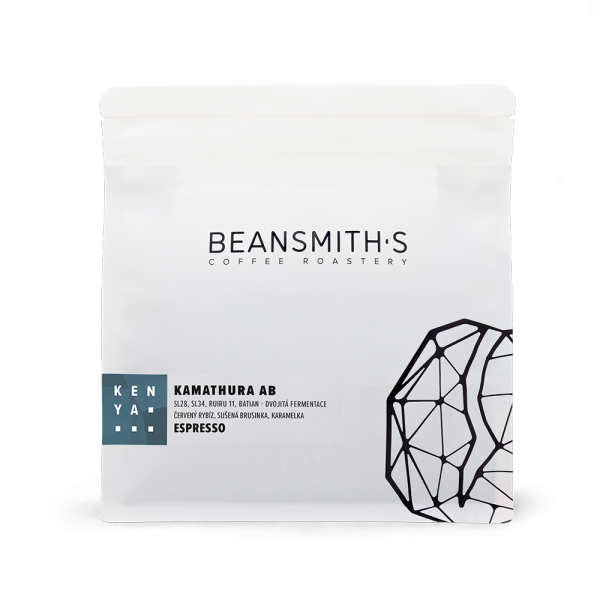
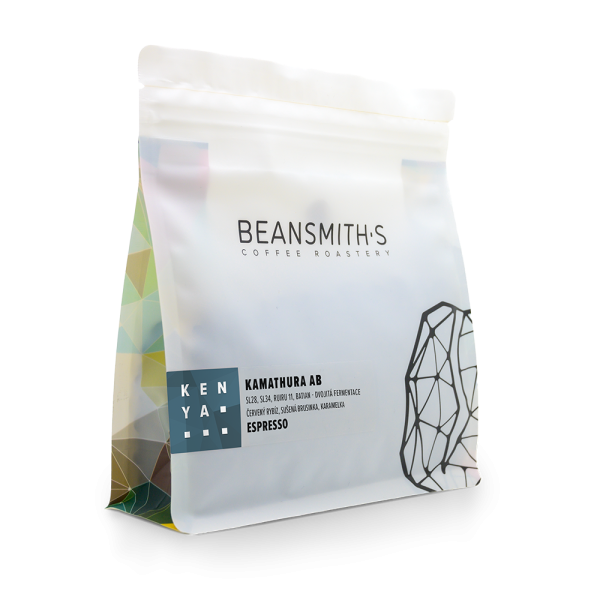

Kamathura AB
KenyaFarm: Various
Region: Various
Altitude: 1600-1900 masl
Variety: SL28, SL34, Ruiru 11, Batian
Processing: Double fermentation
Flavor notes: red currant, dried cranberries, toffee
Cupping score: 86
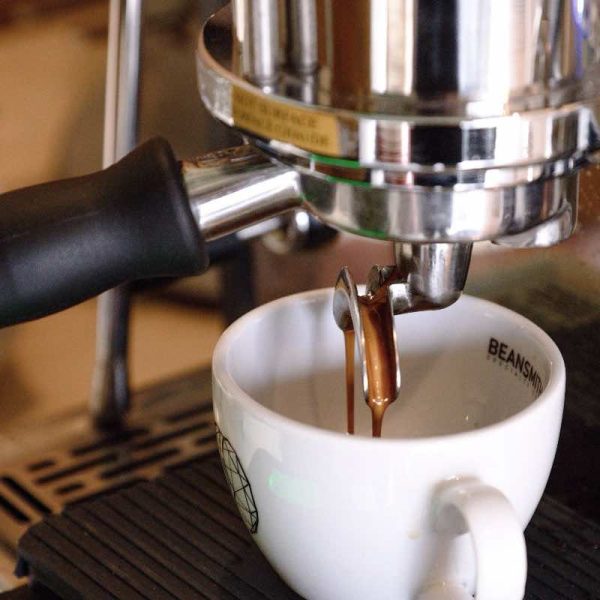
Best for: Espresso
AciditaHigh
IN STOCK
Dispatched on the day of roasting
ALWAYS FRESH COFFEE
Roasted Mon, Tue & Thu
FREE SHIPPING
Depending on location
coffee
needs time
You can drink this coffee as soon as it arrives. However, we recommend waiting a while for it to reach its peak quality and, ideally, brewing it as an espresso three weeks after roasting.
For this coffee, the optimal date is
We’ve finally got Kenyan espresso coffee back in the lineup. It’s really full-bodied and beautifully sweet. Just the way it should be!
Kamathura is the name given to carefully assembled lots originating from various stations across Kenya. The factories whose produce may be included in these lots include the Kathande factory (Kagaari North FCS) and the Kanja factory (Kagaari North FCS) in Embu County, as well as the Miiri factory (Iria-ini FCS) and the Giakanja factory (Giakanja FCS) in Nyeri County. Together, these stations represent nearly 5,000 smallholder farmers whose farms are situated at altitudes between 1,650 and 1,800 metres. These lots consist of classic Kenyan varieties: SL-28, SL-34, Batian and Ruiru II.
The name Kamathura is a combination of two words: ‘KAMA’ from Kamavindi and ‘THURA’, which in the local languages spoken around Mount Kenya means ‘chosen’ or ‘selection’. Kamathura therefore means ‘Kamavindi’s selection’. This lot has been carefully curated with quality in mind… these are coffees in which every single component has been tasted, assessed and selected based on its profile and score, with only those meeting strict standards being included. Farmers are then offered a premium for this quality.
Kamavindi Coffee is a family-run business in Embu, Kenya, founded in 1958, which now operates its own training centre and cupping laboratory. Through the Kamavindi Coffee Lab initiative, it trains cooperatives and stations in processing and post-harvest practices and helps them establish direct contacts with international buyers. Coffee Quest began working with Kamavindi in 2026, drawn in by their commitment to transparency, quality and educating the local community, and we look forward to developing this relationship further!
SL28 is one of the best known and most respected African varieties. From Kenya, where it was originally selected in the 1930s, it has spread to other parts of Africa (it is particularly important in the Arabica growing areas of Uganda) and now to Latin America. The variety is suitable for medium to high altitudes and is drought tolerant, but susceptible to the main coffee diseases. SL28 is characterised by rusticity, a trait that means it can be left untended for several years or even decades and then return to successful production. Many parts of Kenya have SL28 trees that are 60-80 years old and still productive. The variety was selected at the former Scott Agricultural Laboratories (now the National Agricultural Laboratories, NARL, located in Kabete). The individual tree selections made at Scott Laboratories between 1935 and 1939 were prefixed with SL. There were 42 in total and they were examined for yield, quality and resistance to drought and disease. Recent genetic tests have confirmed that SL28 is related to the Bourbon genetic group. It has become valued for its sweet, complex flavour with vinous undertones.
SL34 was originally selected in Kenya in the late 1930s at Scott Agricultural Laboratories. It is very susceptible to major diseases such as coffee rust, coffee berry blight and coffee berry disease. Therefore, proper disease control and prevention strategies are essential for its successful cultivation. Recent genetic tests have shown that SL34 is related to the Typica genetic group. The variety is known for its exceptional cup quality, full body and pleasant acidity.
Ruiru 11 is a variety developed from numerous varieties. Catimor (female parent) x a multi-cross selection including, among others, K7, SL28, N39, and Rume Sudan (male parent). This Kenyan high-yielding, dwarf/compact hybrid is tolerant to coffee rust and resistant to coffee berry disease (CBD). In terms of flavor, Ruiru 11 is not particularly interesting and has a slightly earthy profile.
Batian is a tall variety that combines high yields, resistance to coffee rust and coffee berry disease, and good cup quality. It was bred in 2010 from Ruiru 11, but its flavour profile is already considerably more interesting.
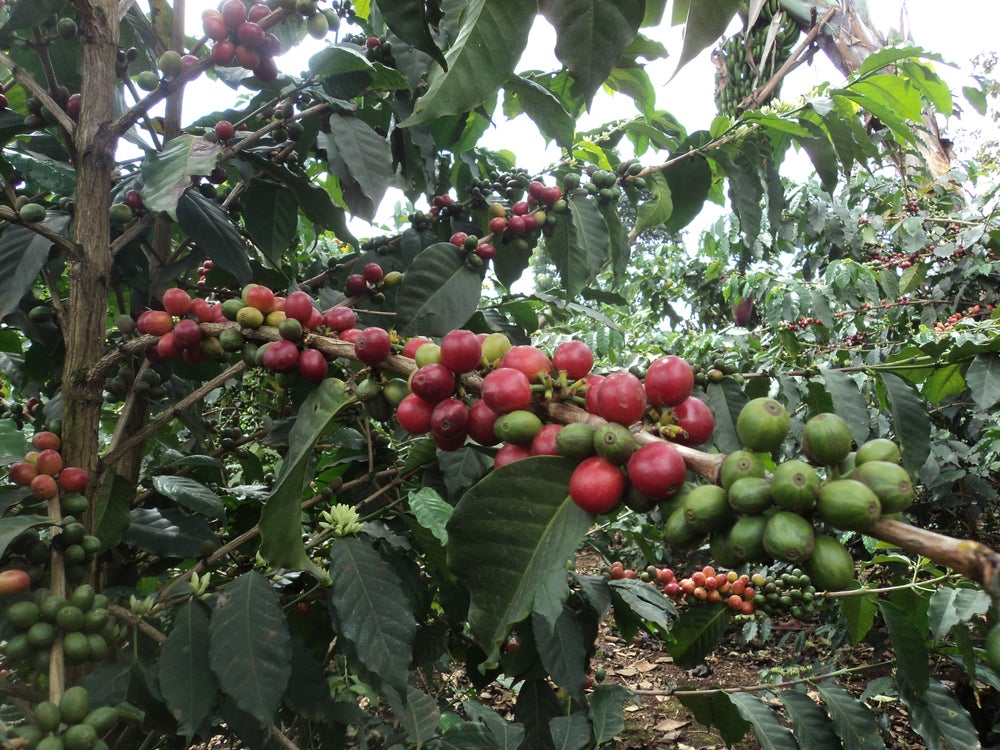
The coffee is hand-picked, ensuring only ripe red cherries are delivered to each factory. Pulping takes place in the evening after sorting and floating are completed. The coffee undergoes a double fermentation: an initial 20 hours of dry fermentation, followed by an intermediate wash to remove mucilage, then another 20 to 24 hours in fermentation tanks before the final washing and grading. The parchment is dried on raised beds for 14 to 21 days, depending on weather.