















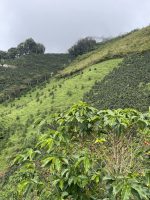
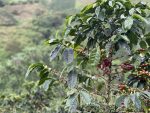


Farm: Miraflores
Region: Huila, Pitalito
Altitude: 1750 masl
Variety: Geisha
Processing: Anaerobic honey
Flavor notes: raspberry, jasmine, peach iced tea
Cupping score: 88
Best for: Filter
AciditaMedium

We’re always delighted when we discover a farmer with amazing coffee. Thanks to our partners at Chicas Industry, we’ve managed to do just that. The girls at Chicas have only recently started working with Luceelly, but her coffees are truly excellent. We’ve chosen a Geisha variety processed using the anaerobic honey method. It has a very sweet and fruity flavour.
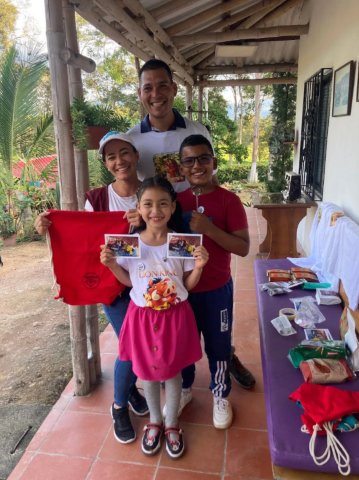
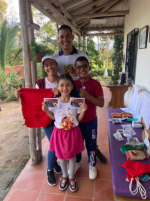
Luccelly is a passionate coffee farmer who began her journey in coffee after moving to the Huila region in 2014. Originally from Antioquia, where coffee is not traditionally grown in her area, she had no prior experience with coffee farming. It was in Huila that she met her husband, a coffee farmer, who introduced her to the world of coffee. Together, they embarked on a journey to transform their lives through coffee, believing in its potential to create something unique, exotic, and of high quality. In 2019, Lucelly and her husband purchased a coffee farm that was in poor condition. Through months of hard work, they learned how to restore the soil and bring the coffee trees back to productivity. Lucelly is passionate about teaching others that coffee is a treasure, one that holds immense value for farmers and the country as a whole. For her, coffee connects people to a world of pride, biodiversity, and flavors.
The Miraflores farm, located in Pitalito, Huila, was abandoned when Lucelly and her husband acquired it. The farm required significant restoration, and Lucelly took it upon herself to learn about soil health and coffee cultivation. She discovered that coffee plants, much like humans, need to be healthy to produce good fruit. While her husband initially worked elsewhere to support the family and the farm, Lucelly began studying at SENA (National Learning Service) to improve her knowledge of coffee production. She started roasting small batches of coffee and selling them to neighbors to build recognition for their product. Over time, they developed their own coffee brand, Dolcecafé, and began participating in events, fairs, and business networking opportunities. Through their efforts, they learned to market their coffee, set fair prices, and focus on specialty coffee production. Both Lucelly and her husband completed a cupping course at SENA, which helped them further refine their skills. Today, their coffee is recognized internationally, with clients even exporting it to Asia.
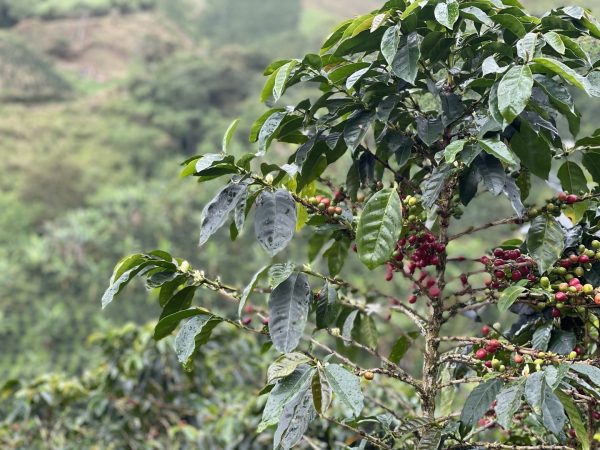
The Miraflores farm produces a variety of specialty coffees, including Geisha, Ají, Pink Bourbon, Sidra, Caturro, and Supremo. Lucelly and her family are committed to improving their processes and ensuring the highest quality in their coffee. Their dream is to fully utilize everything their farm produces and to gain the recognition and fair prices they deserve for their hard work. Lucelly believes that coffee farming is not just a livelihood but a way to connect with the world and showcase the richness of Colombian coffee.
Geisha – this variety was originally collected from coffee forests in Ethiopia in the 1930s. From there, it was sent to the Lyamungu research station in Tanzania, and then brought to Centro Agronómico Tropical de Investigación y Enseñanza (CATIE) in Central America in the 1953, where it was logged as accession T2722. It was distributed throughout Panama via CATIE in the 1960s after it had been recognized for tolerance to coffee leaf rust. However, the plant’s branches were brittle and not favored by farmers so it was not widely planted. The coffee came to prominence in 2005 when the Peterson family of Boquete, Panama, entered it into the “Best of Panama” competition and auction. It received exceptionally high marks and broke the then-record for green coffee auction prices, selling for over $20/pound. There is significant confusion about Geisha because there are multiple genetically distinct plant types that have been referred to as Geisha, many of which share similar geographic origins in Ethiopia. Recent genetic diversity analyses conducted by World Coffee Research confirm that Panamanian Geisha descendent from T2722 is distinct and uniform. It is associated with extremely high cup quality when the plants are managed well at high altitude, and is known for its delicate floral, jasmine, and peach-like aromas.The spellings Geisha and Gesha are often used interchangeably, relating to the fact that there is no set translation from the dialects of Ethiopia to English. The coffee was first recorded in germplasm records with the spelling “Geisha,” and coffee researchers and germplasm banks have mostly maintained that spelling over many decades, leading that spelling to be promoted and used first in the coffee industry. The coffee was originally collected in Ethiopia in a region close to a mountain whose name is most commonly rendered in English as Gesha. Consequently, many in the coffee industry have preferred to rescue that spelling.

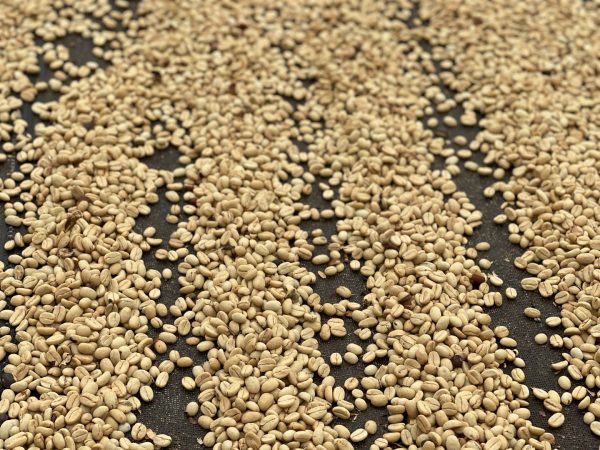
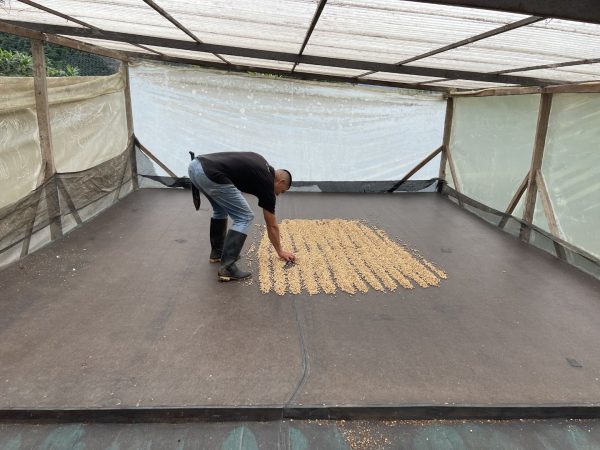
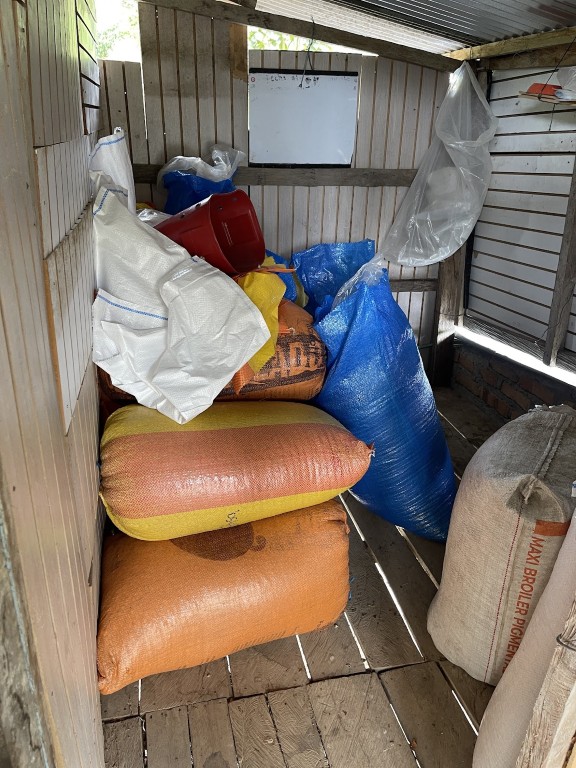
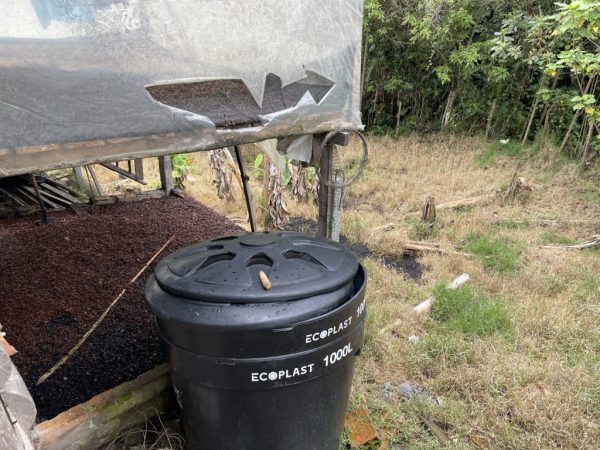
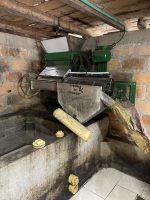
Immediately after harvest, the coffee cherries undergo floating in water to eliminate defective fruits that rise to the surface and to ensure thorough cleaning. Green cherries, semi-ripe cherries (pintón), flowers, leaves, and sticks are removed. The cleaned cherries are then placed in GrainPro bags and left for 36 hours in aerobic fermentation. Subsequently, the cherries are depulped and transferred to sealed containers where they undergo 96 hours of fermentation in a closed environment. After fermentation, the coffee is partially washed (semi-washed/honey) washed and transported to the drying facility. The drying process takes place in a traditional dryer, where the duration depends on weather conditions, typically taking 15 to 20 days. Once the coffee reaches optimal and uniform moisture levels, it is packed again in GrainPro bags and stored in the warehouse. This standardized processing method is applied to all lots produced on the farm and has proven over time to be the most reliable approach.
We fell in love with this coffee from the small Miraflores farm right away. Thanks to its longer fermentation, the coffee is beautifully juicy and expressive, while still retaining a remarkable clarity. In the body, you can easily find notes of raspberry and peach, complemented by a delicate touch of jasmine. The finish is dominated by a very pleasant, long-lasting green tea note.
Miraflores has medium malic–phosphoric acidity and medium sweetness. However, it most likely won’t stay in our lineup for long, as we only have a limited amount available.
Recommended UFO recipe with F-type filters:
- Water temperature: 94 °C
- Water: 250 ml
- Coffee: 15 g
- Grind size: 900 microns (30 clicks on Comandante)
Pouring schedule:
- 0:00 – 50 ml water
- 0:30 – 100 ml water
- 1:00 – 150 ml water
- 1:30 – 200 ml water
- 2:00 – 250 ml water
Total brew time: approximately 2 minutes and 30 seconds.
We recommend the following coffee recipe for the Fellow Aiden and Ode combination:


Set the parameters on Fellow Aiden for individual recipes using the link in the image above.
300 ml (recipe 1+5)
1000 ml (recipe 1+8)